
How to Automate an Auto Service in 2026: Telegram Bot, Mini App, and Website
A practical playbook for automating a car service: online booking, repair status, payments, reminders. With a live Telegram Mini App demo and ROI breakdown.
- #auto-service
- #automation
- #telegram
- #mini-apps
- #business
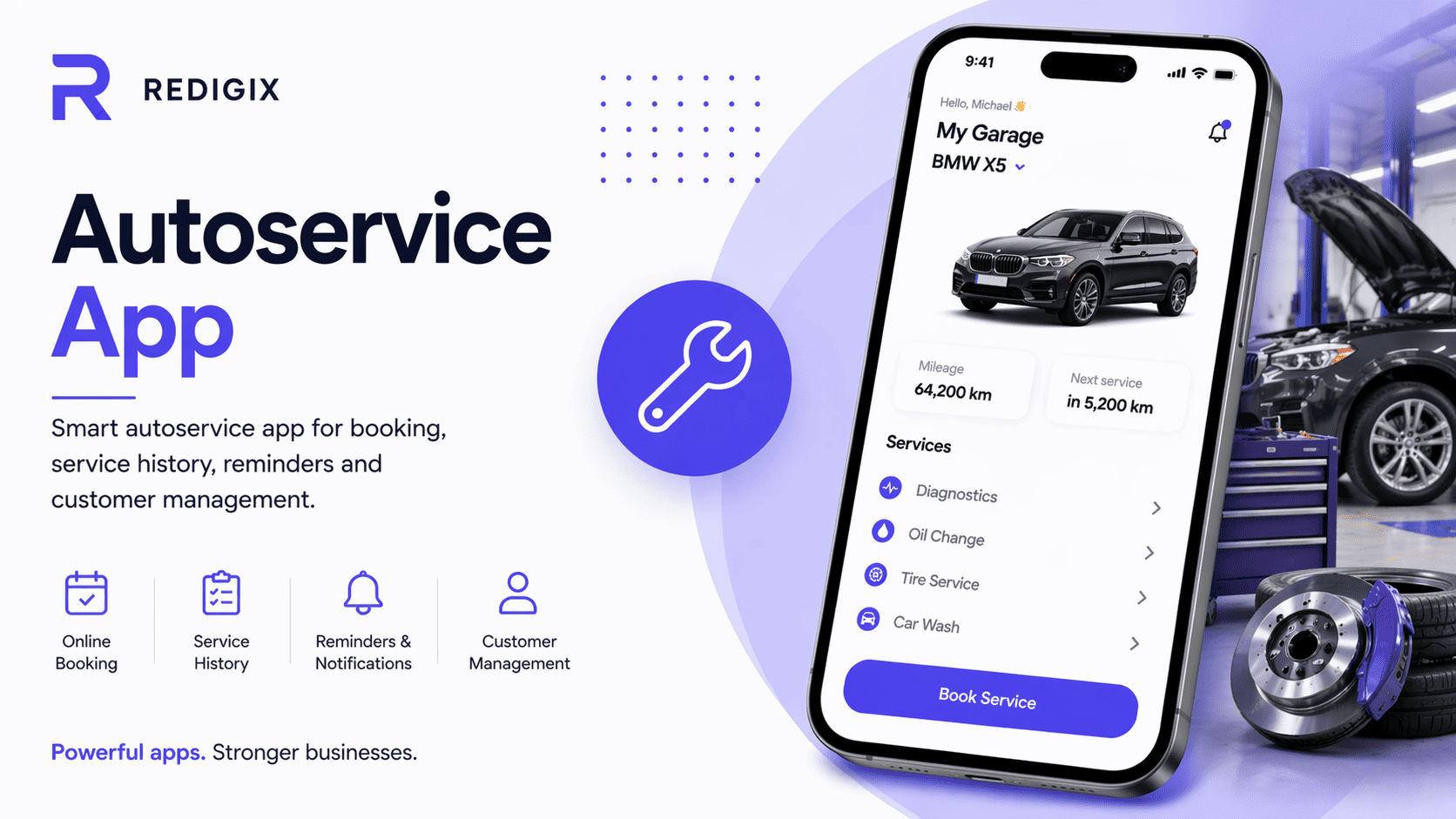
A 2026 auto service is no longer "drive in, drop off, done". Customers expect online booking, repair status updates, photo reports, and paying from their phone. Shops still stuck on paper and Excel simply lose.
The good news: you don't need a $100k custom CRM. A Telegram bot, a Mini App, and a modern website cover 80% of processes quickly and affordably.
Why the typical auto service struggles
- Bookings scattered everywhere — some in Instagram DMs, some in WhatsApp, some by phone. The service writer keeps asking mechanics "when are you free?".
- The customer has no idea of the status — they call three times a day: "So how's it going?"
- Invoices made by hand — in a notebook or Excel, often with errors.
- No vehicle history — next time the customer explains again that they drive a 2018 Skoda Octavia.
- Repeat sales don't happen — service due in 6 months? Forgot to remind. Seasonal tires in November? Nobody called.
What you can actually automate
1. Online booking with service and time selection
The customer opens the bot or Mini App, picks the service (maintenance, diagnostics, tire change), car model, a time slot that's actually free. The service writer stops looking at a notebook — bookings land directly in the mechanics' schedule.
2. Real-time repair status
The mechanic taps a single button in the bot: "Diagnostics done", "Parts ordered", "Ready for pickup". The customer automatically gets the current status and photos if needed.
3. Electronic work pre-approval
Before repair, the customer gets a list of proposed tasks with prices. One click — "approved". No more "I didn't know it'd cost that much".
4. Vehicle history
Every past repair is stored in the customer's profile. A new mechanic instantly sees: "Transmission repair — November 2024, 12-month warranty".
5. Automatic reminders
"Your service is due in 2 weeks — book a slot?", "Winter is coming, time for tires", "Your brakes are 2 years old — want us to check?". Reminders fire on their own, no manager needed.
6. Online payment
The customer picks up the car and pays by card right in the bot via Stripe / local gateway. No cashier needed — an accounting report is generated automatically.
7. Reviews and NPS
After the repair, the customer gets a "Rate our work 1-10" prompt. Low score — the manager is notified instantly. High score — an invite to leave a Google review.
8. Internal dashboard for the owner
Revenue per day/week, most profitable services, mechanic workload. Real-time management, not a weekly Excel ritual.
Bot, Mini App, or website — what to choose
| Tool | Best for | Not great for |
|---|---|---|
| Telegram bot | Quick booking, reminders, repair status | Parts catalog, visual UX |
| Telegram Mini App | Full customer portal, history, payment | SEO (not indexed by Google) |
| Website | Google search, price list, reviews | Day-to-day interaction (customers prefer messengers) |
Real numbers: what automation delivers
A typical 5-mechanic auto service before automation:
- Service writer spends 3-4 hours per day on calls and bookings
- 20-30% of bookings are lost (missed call, forgot to call back)
- Repeat customers come back "by chance" — every 6-12 months
After rolling out the bot and Mini App:
- Service writer reclaims 2+ hours per day for upsell and service quality
- Booking losses drop to 2-5%
- Repeat visits become regular rather than accidental thanks to automatic reminders
Our ready demo
We built a sample Mini App for an auto service — you can test the real UX. It opens in Telegram and works exactly like a live product:
→ Open the auto service demo in Telegram
How we roll it out
- Process audit (1-2 days) — we study how you intake customers today, what hurts most, what to automate first.
- Design (3-5 days) — UI prototype, bot scenarios, data model.
- MVP build (2-3 weeks) — bookings, statuses, payment. Functionality that delivers value immediately.
- Launch and team training (1 week) — your service writer and mechanics learn it in 1-2 hours.
- Ongoing support — we extend the system based on what real use reveals.
Cost
The final cost depends on scope: number of features, integrations with your systems, catalog size, process specifics. A basic solution with core functionality typically takes 2-4 weeks of work; a full version with extended logic and integrations — 6-10 weeks.
We'll give you a concrete quote after a short call to understand your priorities and scope.
Next step
Want to talk about automating your shop? Message our manager: @RedigixManager. We'll look at your situation, show more examples, and give you a price.