
Automating a Delivery Service in 2026: Telegram Mini App, Tracking, and Dispatcher Dashboard
How a delivery service moves from dispatcher calls to automatic order intake, courier assignment, real-time tracking, and online payment. With a Mini App demo.
- #delivery
- #automation
- #telegram
- #mini-apps
- #logistics
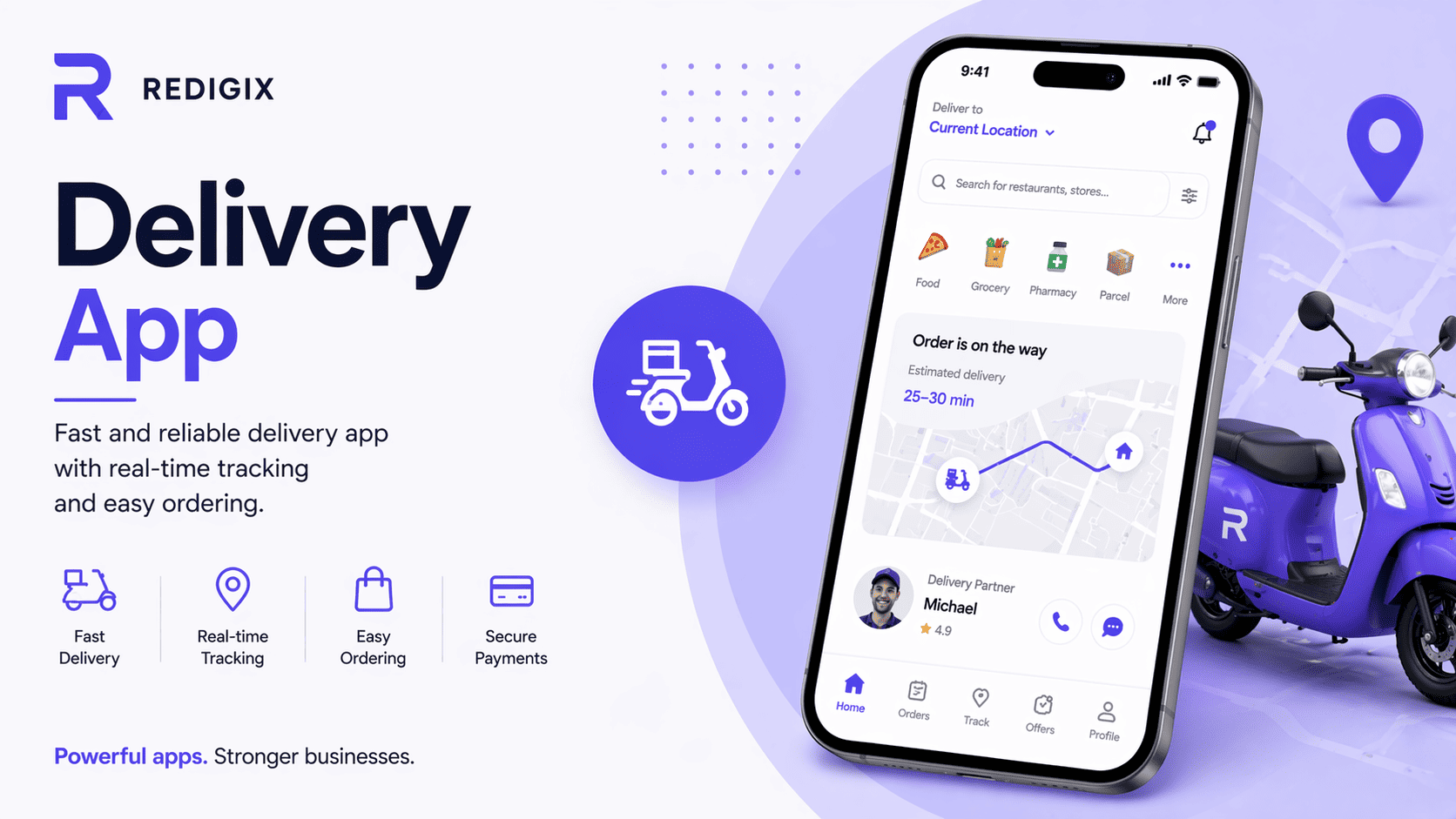
A delivery service doesn't win on price — it wins on speed, accuracy, and transparency. When a client sees the courier on a map in real time, they don't call dispatch asking "where's my order?". When the courier gets an optimal route via Telegram, they don't call the client asking "where do you live?". In 2026 this isn't premium — it's the baseline expectation.
A Telegram Mini App, a bot, and a website let you run a full-featured delivery service without building a native mobile app.
Typical delivery service pains
- Phone orders — the dispatcher mishears addresses, repeats, client gets annoyed.
- Couriers need constant calls — "where are you?", "picked up?", "delivered?".
- Client has no idea where the courier is — calls support, gets "we're checking".
- Cash — end-of-day reconciliation, risk, errors.
- Reorder pain — client dictates address, phone, order details from scratch again.
What to automate in delivery
1. Online ordering with address autocomplete
Client opens the Mini App, picks pickup and drop-off on the map. Address autocomplete eliminates mistakes. No dispatcher typing what they hear.
2. Automatic courier assignment
The system sees all couriers on the map, their current status (free, on route, break), distance to pickup. Automatically assigns the fastest. No dispatcher needed for 80% of regular orders.
3. Real-time tracking
Client sees the courier on the map with an ETA. Courier in Telegram — one button for "picked up", "en route", "arrived". No "where are you?" calls.
4. Route optimization
If a courier has 3-4 orders at once, the system builds an optimal route. Less delivery time, more orders per shift, less fuel cost.
5. Proof of delivery
Courier in the bot takes a photo of the door/recipient or requests an SMS code. No disputes about "I didn't receive it". Proof attaches to the order automatically.
6. Online payment or cash on delivery
Client picks method: card in the Mini App (fastest), cash, courier's terminal. Electronic payments flow into accounting automatically.
7. Favorite orders
Returning client taps "repeat last" → address, recipient, size — all prefilled. 15 seconds to order instead of 3 minutes on the phone.
8. Dispatcher dashboard
Map with all couriers, order queue, average delivery time, zone load. Dispatcher sees everything on one screen instead of switching between 5 tabs.
Bot, Mini App, or website for delivery
| Tool | Best for | Not suitable for |
|---|---|---|
| Telegram bot | Courier interface (statuses, routes, chat) | Client ordering with a map |
| Telegram Mini App | Client orders, tracking, history | Google search (not indexed) |
| Website | SEO, B2B clients, tariffs, contracts | Day-to-day ordering (harder than Telegram) |
Before and after automation
Before:
- Dispatcher spends entire shift on phone
- Average delivery time is unpredictable
- Clients call support asking "where's my order?"
- Address errors and redeliveries happen routinely
After:
- Dispatcher handles only exceptions — 80% of orders are automated
- ETA shown to the client with 10-minute precision
- Support is freed to solve real issues, not answer "where's the courier"
- Address errors nearly vanish thanks to autocomplete
Live demo
We built a Mini App for a delivery service — you can test the full ordering UX, from checkout to tracking:
→ Open the delivery demo in Telegram
How we roll it out
- Audit (1-2 days) — couriers count, order types, geography, current system.
- Design (4-5 days) — client UX, courier interface, dispatcher dashboard.
- Build (4-6 weeks) — ordering, assignment, tracking, proof of delivery, payment.
- Pilot with a subset of couriers (1 week) — 2-3 couriers test in live operations.
- Full launch and support — gradual rollout to the entire team.
Cost
The final cost depends on scope: number of features, integrations with your systems, catalog size, process specifics. A basic solution with core functionality typically takes 2-4 weeks of work; a full version with extended logic and integrations — 6-10 weeks.
We'll give you a concrete quote after a short call to understand your priorities and scope.
Next step
Want to see how it would work in your service — @RedigixManager. We'll discuss geography, order types, integration with your CRM or WMS.